
Cash vs. Accrual Accounting Explained: A Guide for Business Owners

Introduction to Accounting Methods
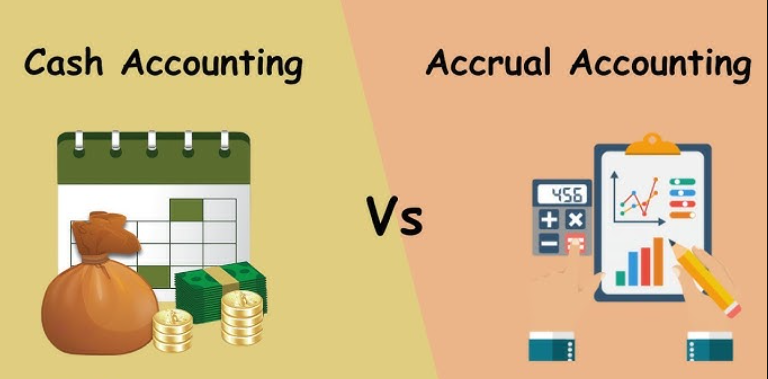
The accounting method is one of the initial choices which arise when running a business. The method that you adopt dictates the way financial transactions will be documented and how all this will affect cash flow tracking up to preparation of tax returns. Cash and accrual accounting are two commonly used methods, which have their own mechanics and implications concerning the way of dealing with income and expenses.
Cash accounting is considered to be rather simple and is only a method of registering a transaction when money is exchanged. However, the accrual accounting is more comprehensive in its approach since it is based on the income when earned and expense when incurred, irrespective of the time of payment. This is the major difference, as each approach paints a clearer financial picture, predetermining the way you will perceive your company performance and design your future.
The key to making the most appropriate decision in your business is to fully understand the mechanics behind each of the approaches. The decision you make can also influence the financial reporting, regulation adherence and even the perception of financial status of the organization by stakeholders.

Understanding Cash Accounting
There is a very simple principle that cash accounting follows: income and expenses are not recorded until the money is finally accepted or paid. This is the cash flow methodography, which depicts the cash flow in real time, and therefore, is an option that is feasible when businesses are focused on simple bookkeeping.
The time when the money is transferred is recorded when the exchange takes place, which gives a straightforward and simple perspective of the cash on the hand without having to factor in the intricacies of the future debt or earnings.
Cash accounting suits well most smaller businesses and individuals working independently. It is also very easy to use, and its nature enables business owners to concentrate on the main operations without the complex accounting regulations. Also, since transactions are only registered on receipt of payments, it minimizes the chances of discrepancies and confusion in financial records.
It is particularly useful in the case of business that runs on cash (retail stores or small service providers) where the payment is usually instantaneous. With just a focus to the real cash inflow and outflow, the business owners can quickly gauge their financial status and take the right decisions on how to spend or save. Besides, cash accounting sometimes uses less sophisticated software or systems, which once again makes the administration of small businesses less cumbersome.
Exploring Accrual Accounting
In accrual accounting, financial activity is recorded depending on the time of earning income and incurring expenses rather than when transactions of money occur. This is a way of making sure that the revenues are compared to the cost of the revenue generated and this will help businesses have a better picture of how they have performed in the long term.
The possibility to record transactions across periods is one of the main characteristics of accrual accounting. Indicatively, when a business makes an offer of a service within a given month and collects it the next month, accrual accounting records the revenue when the service is given. On the same note, costs of utility bills or supplier invoices are included when the obligation is due regardless of whether or not it is paid.
This technique is particularly useful to companies that have long billing cycles or those that deal with huge inventories. It provides improved monitoring of accounts receivable and accounts payable which makes sure that all the financial obligations are covered even before cash is exchanged. It also allows business to make more detailed financial reports that can be useful in making decisions and other long-term plans.
The accrual accounting might need more advanced tools and expertise to be effective. It entails application of certain accounting principles such as matching principle that states that revenues and expenses should be accrued in the same period.
Although it may make it more complicated, the information on the finances that is generated through such a method can contribute to more effective forecasting and budgeting, which is why it is a crucial option to consider when a company wants to streamline its processes and attain a long-term growth.
Key Differences Between Cash and Accrual
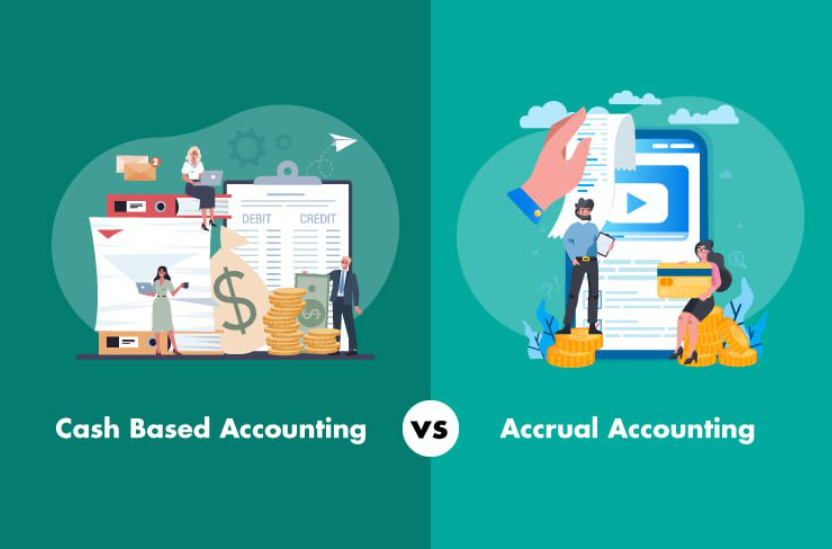
The most important differences between cash and accrual approach revolve around the recognition of income and expenses by both approaches. Transactions are updated in real-time in cash accounting as they are received and paid therefore giving a clear picture of cash flow.
This method is concerned with how money moves and thus it becomes easier to trace the money available at a particular time. It does not however take in to consideration outstanding obligations or revenue that has been earned but has not yet been paid.
Conversely, under accrual accounting, income is recognized when it is realized and expenses when they are incurred irrespective of the timing of the exchange of cash. This approach takes into consideration a more holistic financial view as the revenues and costs are aligned, and provide information about profitability within a given time frame.
Accrual accounting enables business enterprises to keep a better track of accounts receivable and payable, which will help them have a better insight to their financial obligations and cash outflow.
A significant difference is in the way in which both approaches influence financial reporting. Accrual accounting gives a detailed financial statement that can assist businesses in making decisions, planning budgets as well as identifying trends. Conversely, cash accounting gives a simple portrayal of the amount of cash available on hand and this may be adequate in businesses that depend on transactions which occur immediately or businesses operating at a low scale.
Tax reporting is also another factor to consider. Due to the variances in timing of the income and expenses, it is possible that the businesses might determine that their taxable income will be different based on what approach is taken. This disparity might affect the manner in which business conducts its tax planning and compliance especially when it grows bigger or more complex.
Factors to Consider When Choosing a Method
A number of factors determine the use of cash or accrual accounting systems with the business structure and operational requirements being the main factors to consider. Cash accounting is easy to implement and maintain and thus the smaller businesses, whose transactions are simple tend to adopt the method. Conversely, accrual accounting might be needed by more complex financial operations like credit sales or inventory control operations by a company.
The other consideration is the financial reporting that your business requires. In the case your business requires more detailed records to match income and expense to reflect a more realistic picture of profitability, then accrual accounting can perhaps suit you better. It is especially crucial in the case of businesses that are looking to both obtain external funding or collaborate as such stakeholders would generally be more inclined to use detailed financial reports.
Taxation is also an aspect in the decision. Various accounting procedures can lead to different taxable incomes because of the time during the recognition of the revenue and expenses. The owners of the business need to consider how these differences would be in line with their tax strategy and financial planning goals.
Practices and legal requirements particular to the industry also have to be considered. There are industries particularly those that deal with government contracts or specialized industries, which might necessitate that certain accounting standards are followed to determine the method to be applied. Further, the adoption of accrual accounting might be legally required of the businesses with certain size or income level.
Finally, the process of selecting the appropriate approach is concerned with determining the approach that would most effectively meet the specifics of your business and its objectives, as well as be in compliance with any possible regulation or standard.
Transitioning Between Accounting Methods
The conversion between accrual accounting and cash accounting or vice versa may be a big change to a business. The key before starting the change is to assess the need to change and how it will help you in achieving your financial goals. It can be a good idea to consult a good accountant or financial advisor and outline the pitfalls that may arise and make the process smooth.
One of them is the first step which is to prepare your accounting system to suit the new method. This involves upgrading software to the newer approach and also make sure that it is able to follow transactions as per the chosen process.
Your staff should also be trained regarding the new procedures to ensure that the mistakes are reduced to the minimum and that the new practices are followed.
Businesses that are under transition should reconcile financial records of the business with the new procedure. This may include the revision of income and costs that have been already incurred to conform to the concepts of the new system.
These amendments are essential in order to ensure proper reporting and avoid differences in the course of auditing or submission of tax.
The third step, which is equally important, is to inform the stakeholders including the investors, lenders and the business partners. Effective communication also makes them know how the change can affect the financial reports or projections. Also, companies might have to report it to tax authorities since the move might have an impact on the calculation of taxable income.
By proper planning and expert advice, the process of switching between the methods of accounting is possible and the records are kept accurate as well as the reporting requirements are taken care.
Conclusion and Final Thoughts
The choice of accounting method will become an important decision that will directly influence your business performance goal-tracking methods. Both cash accounting and accrual accounting have their advantages, and the decision should be associated with the operational needs, financial reporting requirements, as well as long-term recommendations.
To small businesses that have simple transactions, the simplicity of cash accounting can be an adequate solution. In the meantime, the accrual accounting can give a company wide-ranging information that is usually useful to those running a business in areas like managing credit sales, inventory, and long-term projects.
In addition to the direct consequences, your decision may affect how tax is planned, whether you comply with a regulation or not, and the quality of financial data to use in decision-making. You need to compare the way each of the methods fits with the needs of a given industry and the legal requirements that your business might be exposed to.
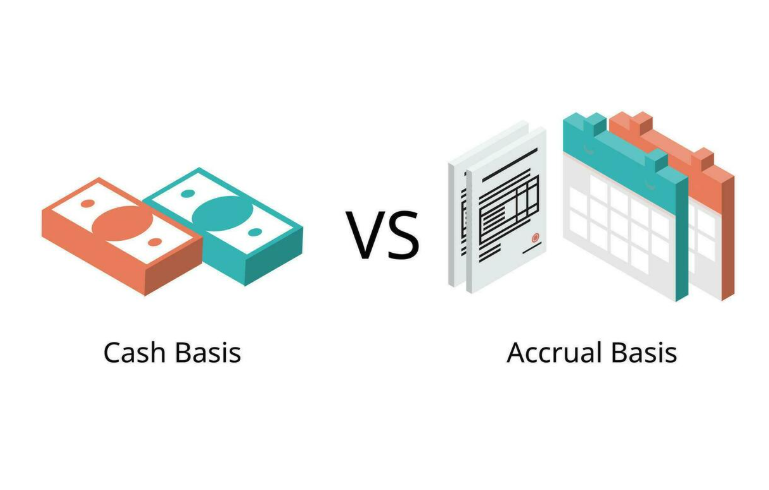
Since the financial needs also change, some businesses might want to switch methods in order to adapt to their business. Although this may be an intricate process, with good planning and expert guidance a change can be made with ease without interfering with financial reporting and compliance.
With a critical evaluation of your business model and advice of an accounting consultant, you are in a strong position to make an informed decision. This does not only make sure that there is proper management of finances, but also makes your business grow and stay afloat in the long run.
Simplify your business finances with expert bookkeeping and accounting, book your consultation now.