
Mastering Sales Tax Compliance for U.S. Businesses in 2026

Understanding Sales Tax Basics
Sales tax is the charge that the government imposes on the sale of commodities and services. It is calculated as a percentage of the transaction and it is charged to the customers directly upon their purchase. After the collection, the businesses are mandated with the responsibility of transferring the right sum to the concerned tax authorities.
The outline and regulations of sales tax may vary according to the state or local jurisdiction, and so, businesses should get acquainted with the particular set of regulations that pertain to their business. A good example being that in some regions; some goods or services might not be taxed at all, whereas some others might be taxed at special rates or limits. It is necessary to know these differences in order to collect and report taxes.
The other area of concern in sales tax fundamentals is the need to determine the sales transactions that should be subjected to the tax. Typically, companies that have a physical presence, or nexus, within a given state have to collect sales tax within the given state. The requirements have however been increased by economic nexus laws in most states, so even companies not physically present may be required to collect tax on their volume of sales or transactions that occurred in a state.
Faithful record-keeping is a major aspect of the management of sales tax. Companies are required to follow up sales, sales tax they have received and or exemptions. These records will not only come in handy during periodical tax filings, but also a case of audit. The basics of the sales tax will make sure that businesses pay their taxes and do not face the fines of not paying.
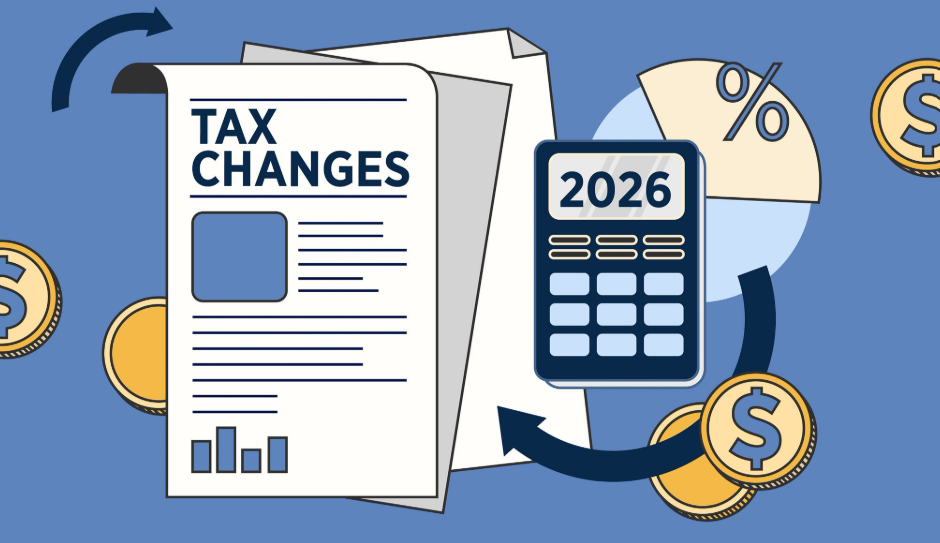
2026 Sales Tax Changes
With the year 2026 coming closer, companies must expect changes in sales tax laws around the United States. Some states are realigning tax rates both at the state and local level and this may directly affect the pricing strategies as well as the general compliance initiatives.
There are other states that keep on increasing the number of items and services that are liable to the sales tax and thus a business should reconsider its inventory and service goods and services that are liable to taxation.
Some jurisdictions are updating economic nexus thresholds, which would have more businesses collecting and remitting sales tax. The offices in the businesses that run in various states are supposed to be keen on such updates to be able to know whether their duties have been changed. Also, changes in the filing frequency and deadlines in certain regions will require modification of the existing compliance processes to prevent the imposition of fines.
Tax authorities are still paying increased attention to digital goods and online services, and new policies are being presented to more effectively respond to the emerging digital marketplace. The online companies must be more careful in determining how these changes can be relevant to them.
The marketplace facilitators are also being targeted by state level laws, revising the obligation on the way the sales tax is collected and reported by third parties. Sellers who use such platforms ought to analyze their agreements in order to establish that taxes are being dealt with appropriately. The most important factor in changing with the dynamic tax environment in 2026 will be to keep up with such changes.
State-Specific Compliance
To navigate the state specific sales tax laws, one has to have a good grasp of the various rules and regulations that govern the sales tax in each jurisdiction. It can be special requirements of certain states, including some exemptions or forms that are to be filled out. The other states are allowed to establish different levels of economic nexus, i.e. businesses are supposed to be aware of where and when they need to collect and remit sales tax.
Moreover, the local jurisdictions of states can include specific rates or regulations, which further complicates the situation of companies that operate in different locations.
Rules of taxability may also be diverse. Although a few states levy taxes on digital goods, there are those that may do away with the tax or subject them to certain conditions. The same can also be applied to tangible goods/services that can be classified into specific categories as per the state which in turn influences the application of taxes. The business should make sure that the accounting systems used are compliant with the prevailing tax rates and product classifications in the states in which they are doing their businesses.
The changes in the legislation should also be observed because the state governments constantly reconsider their tax policy in order to concentrate on the new tendencies in the economy or policy goals. The businesses can be kept up to date by using reliable sources such as websites of official state tax agencies.
It can also be useful to subscribe to industry newsletters or to consult professionals who can be an eye opener on what the state may demand. Being aware of these subtleties will enable companies to stay compliant and reduce the risks involving the mistake or negligence in tax reporting.

Technological Tools for Compliance
With the help of sophisticated technological solutions, the issues of sales tax compliance can be minimized to a great extent. The current software packages can be used to address state specific rules, compute correct tax rates, and deal with filing needs in various jurisdictions.
When you incorporate such tools in your operations, it will be possible to automate time consuming activities including tax rate changes, exemptions and generation of reports.
In case of companies that are located across states, it is common to find compliance tools with the ability to calculate the real-time rate based on the location of the customer, thus ensuring that the taxes are charged accordingly to every transaction.
Moreover, they can have more detailed reporting facilities, and it is simpler to trace the data on tax collection and prepare audits. Several solutions have also been integrated with e-commerce systems, accounting software, and point of sell systems which ensure that all the functions integrate smoothly eliminating chances of manual error.
Others include such features as economic nexus tracking, which would alert a business when it gets close to the level where it has to collect tax in other jurisdictions. Such tools can provide solutions based on clouds, thus enabling remote access and live updating in order to remain abreast with changes in regulations.
It also offers customization features whereby businesses can customize the software to the operations, which will ensure that the software will not interfere with the existing workflow and will be in compliance with its current maintenance. Use of such technology can be used to facilitate the smooth and precise management of the sales tax obligation.
Common Mistakes and How to Avoid Them
Errors in sales tax compliance have been known to occur as a result of not being familiar to particular state and local rules. The common mistake is the wrong rate of tax, particularly, where there is a combination of more than one rate in a particular place. To curb this, companies ought to constantly revisit and revise their rate tables or make use of automated applications to make sure that they have the right figures.
The other general problem is the inability to monitor economic nexus thresholds and thus tax collection duties are overlooked in specific states. Close monitoring of sales information can assist businesses to know when they need to start collecting the tax in new jurisdictions.
Another area where some mistakes are made is in the improper handling of tax-exempt sales. The companies should make sure that they receive valid exemption certificates of the customers and keep them in a safe place. Lack of certificates or certificates that are not complete may result in penalties in case of an audit.
Also, there would be inconsistency between what is collected in terms of tax and what is reported in the filings, which may lead to additional inquiries by tax enforcers.
Another major issue is late payments and filing. To remind themselves of the deadlines or just to make sure to submit the returns and payments on time, businesses are to utilize calendars or reminders. Using technology to automate these processes also would help to minimize the risk of delays. By being proactive in tackling these problems then businesses are able to buttress their compliance procedures and save on redundant fines or auditing.
Planning for Audits
When the sales tax is audited, the compliance of your business to the regulations will be looked into carefully by the tax authorities and therefore, it is necessary to be ready. Have your financial documents, invoices, exemption certificates and sales reports properly in place and readily available.
Keep documents in digital tools to keep them safe but in categories that can be used again when they are needed. By undertaking regular internal reviews, discrepancies in taxes collection or filing can be detected and hence you will have time to rectify such discrepancies before they can pose as problems during an audit.
Make sure that any exemption made is well recorded and with certificates that are great and complete because incomplete ones can be disputed by auditors. Remember the retention period of the tax-related records in your state because not retaining the records of the necessary period may cause some difficulties.
Also, knowing the area of an audit and the jurisdictions covered can assist you in targeting your efforts on preparation towards areas the most relevant. When notice of audit is given, act as fast as possible and comply with auditors to furnish them with the information demanded.
It is also possible to delegate someone in your business who is in charge of handling communication with the auditors to facilitate the process. Remaining on top of things and taking initiative can alleviate stress and show that you are serious in the audit process and observe compliance.
Seeking Professional Help
When dealing with sales tax there is a need to not only know the law but to know how the law applies to the business operations. To gain a better understanding of particular requirements, e.g., the management of state-specific requirements or how new legislation may impact your compliance work, a tax professional may be a good solution. An experienced advisor will be able to assess the current processes, risks that may occur and suggest improvements to enhance the tax collection and reporting process.
Tax professionals come in handy especially in more complicated situations, including the introduction of new states, economic nexus laws, or the resolution of differences that have been identified during the audit. They are also able to help you with putting in place strong compliance principles that will fit your business model and minimize the likelihood of mistakes or omissions. Moreover, these professionals will be informed of the changes in the regulations, and you will be able to adjust to the new demands fast.
In the case of businesses that have the use of advanced compliance tools, tax advisors can help them choose and integrate the software to make sure that it fits well with other systems. Not to mention that professional assistance may make the process easier, no matter whether you constantly require guidance or help regarding certain problems, so that you could concentrate on expanding your business without any problems in maintaining the terms of the sales tax.
Let our experienced tax professionals handle your income and sales tax preparation and filing. Contact Sunrise Accountants now to get started.