
When Should Your Business Upgrade Its Accounting System in 2026?


Introduction to Accounting System Upgrades
The tools and systems which previously served your businesses might no longer be useful as your businesses grow and as the industries change over time. Especially, accounting systems are critical in handling financial data, compliance, and making of decisions. Yet, such systems shall have to adjust to the changes in technology, and evolving regulatory environments to be functional.
The companies have more complicated financial management requirements in 2026. The ability of cloud-based platforms, real-time analytics, and greater automation capabilities have changed the nature of the businesses in regard to their accounting processes. The use of an old system will only make it hard to remain competitive in this dynamic environment.
It is important to note that it is imperative to maintain your accounting infrastructure so that it keeps up to customer demands and business objectives. Upgrade will enable your company to take advantage of modern tools that enhance efficiency, accuracy and security that are critical in these times where data breaches and cybersecurity issues are widespread.
Besides that, the accounting requirements of businesses also increase with the expansion. The systems that were used to handle small operations may not be able to handle bigger and diversified companies. These shortcomings can be mitigated by upgrading, enabling your business to be able to manage its operations at scale without reducing the reporting standards or financial management.
It takes proactive investigation to know when your accounting system has gone as far as it can go. Watching the performance, identifying the areas of gaps and being aware of the availability of solutions are the key measures in ensuring that your company is in good position to defeat the challenges and opportunities that 2026 will come with.
Signs It’s Time for an Upgrade
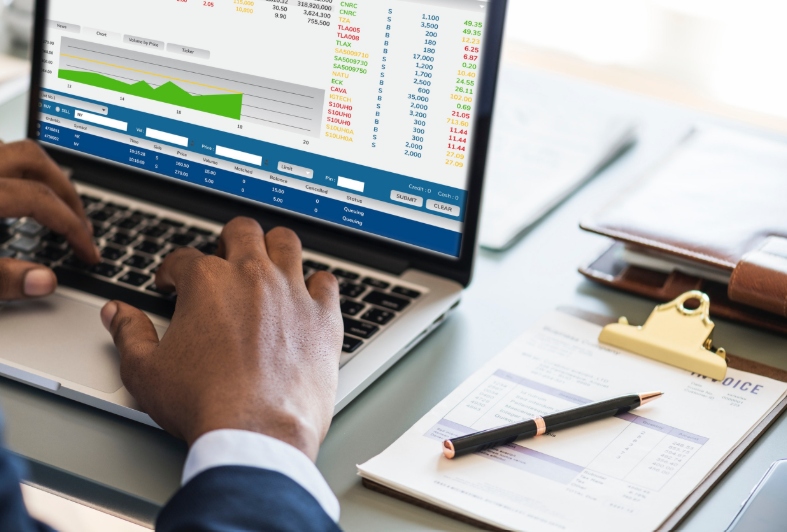
In case your existing accounting system does not support real-time data or other tools that your business depends on, then it may be time to look at an upgrade. The low speed of processing or lack of functionality may introduce inefficiencies which in turn spread over to your operations to influence productivity. Also, when your company expands, you can find that the system cannot cope with more transactions or more complicated financial arrangements and that reporting is delayed or inaccurate.
The lack of functionality that has become the norm on modern platforms, like cloud-based access or sophisticated analytics is another red flag element. These are needed to ensure agility in the current dynamic business environment. Old systems may not be able to provide such capabilities and this disadvantages your business.
Another important area to evaluate is security. Incidentally, your financial information may be at stake because older systems may not have the strong protection to face the current cyber threats. When you had the security breaches or anything related to compliance, then the effectiveness of your system to guarantee confidentiality and regulation compliance may no longer be effective.
Upgrade can also be emphasized through feedback of your team. The fact that people are complaining that the system is not user friendly or people always make workarounds to do the simplest thing confirms that it is not serving your company. It is possible to pay attention to these warning signs to determine when it is time to modernize your accounting instruments.
Evaluating Your Current System
It is important to inspect your current accounting system in order to identify whether it is suitable to suit your current organization requirements. Check its capacity to accommodate the business operational needs of your business such as the processing of transactions and meeting the financial regulations.
Test its ability to process higher amounts of data and the compatibility with other tools that you use regularly. And in case the system is finding it hard to scale, or it is causing bottlenecks in your processes, then that might be a sign of its constriction.
Pay special attention to the automation that the system will provide. Manual operations may make one more susceptible to mistakes and waste precious time which would be used in strategic activities. Explore the possibility of actionable insights in the system presented by reporting or data visualization tools, that are essential in a data-driven business environment.
Obtain the input of those employees who use the system on daily basis. Their experiences will be able to reveal the problems concerning usability, reliability, or functionality that could not be immediately visible. Also consider the ability of the system to cope with changes in your industry or the changing regulations as this rigidity may result in compliance difficulties in the long run.
Lastly, the maintenance of the system should also be taken into account. The systems that are old usually require much time and resources to maintain and this may divert other priorities. Evaluation of these factors will give you a holistic understanding of the level of compatibility of your existing solution with the demands of your expanding business.
Benefits of Upgrading
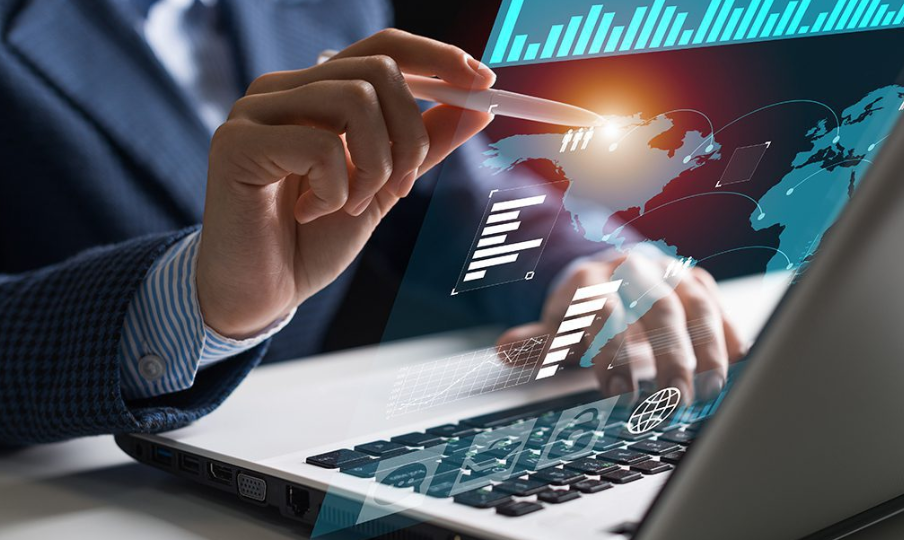
The accounting modernization will bring the tools that will streamline the financial management and maximize the daily running of the business. Automation capabilities such as high automation reduces the human input and the resultant figures are saved, and your staff can work on other more important activities. Such enhancements are time-saving and, at the same time, improve the accuracy of your financial information and minimize the chances of causing expensive mistakes.
Modernized systems may have real-time reporting and data visualization features, which will provide you with actionable data into the financial status of your business. You are able to make quality decisions faster with these tools and stay on top of the competitive market. Interoperability with other business tools is also made easy and a complete ecosystem is established to facilitate more workflow and departmental co-operation.
The key advantage of newer platforms is security improvements. As cyber risks keep transforming, the current systems have greater protection to secure your financial data. Such characteristics as multi-factor authentication and encryption allow an additional security level, which prevents the unauthorized access and information leakage.
The other advantage is scalability. With the expansion of your company, a modernized system will be able to process more transactions and more complicated financial processes. This is because it is flexible so that your accounting infrastructure keeps up with your growing operations without interruptions.
Greater compliance is also worth noting. High-end systems are usually built to be in tune with the changes in regulations that will ensure that the sanctions or audit will not be based on old systems. This renders them a sure bet when it comes to financial integrity in the long-run.
Considerations Before Upgrading
Prior to investing in the accounting system upgrade, you need to consider the needs of your business in particular and the challenges that may be posed by the process. Start by determining the characteristics and functionalities that are of importance to your business. As an illustration, ask yourself, does your business need advanced reporting software, compatibility with other software, or the capability to access it via the cloud? The knowledge of such requirements is an assurance of matching the system that you will select to those objectives.
Another step is determining the preparedness of your team to change. The implementation of a new system may be a major change and it is essential to check the readiness of employees to adopt new procedures. The success of the upgrade may be slowed down by lack of user buy-in or resistance to change thus attending to such issues in advance may help streamline the process.
Another very important factor is timing. Any upgrading in the middle of the peak business activity can be stressful to your team and cause disruption in your work processes. Rather, choose a time frame during which the transition will not affect your daily activities much.
Finally, consider the investment worth in the long-term. It is true that initial expenses might appear heavy, but concentrate on the pay-off of the system in the aspects of efficiency, security, and scalability. It will be advisable to make a well-informed choice by ensuring that the platform is aligned to your immediate needs and also to your long-term goals.

Choosing the Right Accounting System
In 2026, assess accounting systems based on the exact characteristics that your business needs to be effective. Search software that offers powerful means of automation to eliminate manual activities and limit errors.
Those with real-time reporting features and data visualization will increase your financial performance monitoring capabilities and ability to make informed decisions in a short time. Another important thing is the compatibility with your current software; you will get the ability to have the flow of work easier and less disruption within the various departments.
Usability should as well be taken seriously. An easy-to-use interface may facilitate the transition process and increase the rate of adoption among the employees. Moreover, pay attention to the security of the platform in order to protect the sensitive financial information. Seek out multi-factor authentication, encryption and other high-level protection measures to curb cyber threats.
Study the capacity of the system when your business grows. A platform that is capable of supporting the growing volume of transactions, as well as adjusting to changing business requirements, has greater long-term value. Ensure that the software provider provides frequent updates so as to keep with the changes in regulations and technology.
Lastly, consider the amount of customer support, stable support can be priceless during and after implementation. Having the system to fit in your current needs as well as what is expected in the future will enable you to make the most out of your investment.
Implementation and Training
It is important to perform your implementation process well so that your new accounting system can become an active part of your business process. Begin by assessing the traps that can befall and develop a step-by-step plan to minimize the disruptions.
The transition should be managed by a team or project manager who should prepare the work on such aspects as data migration, system testing, and troubleshooting. This will necessitate the need to communicate clearly to all the stakeholders to make the process run smoothly and to make the concerns addressed in good time.

Employees are also crucial success factors of a rollout. Trainings Customize the training to suit the jobs and duties of your staff so that employees can have a hands-on knowledge of the system operations related to their work. Offer documentation, web tutorials or access to a help desk to offer continuous support.
The feedback must be done on a regular basis and within the training time so as know what areas needs more support or clarification. It also might be encouraged by letting employees provide their experiences and insight into the new system to create the sense of ownership of the system.
Finally, develop a post-implementation review process to check on the performance of the system and overcome any problems emerging. This long-term demand to maintain and streamline will ensure that your business takes full advantage of the new improved accounting system.
Planning a business upgrade of your accounting system in 2026? Let Sunrise Accountants help you modernize with accurate, scalable financial solutions today.