
Cloud Accounting vs. Traditional Accounting: A 2026 Comparison

Introduction to Accounting Methods in 2026
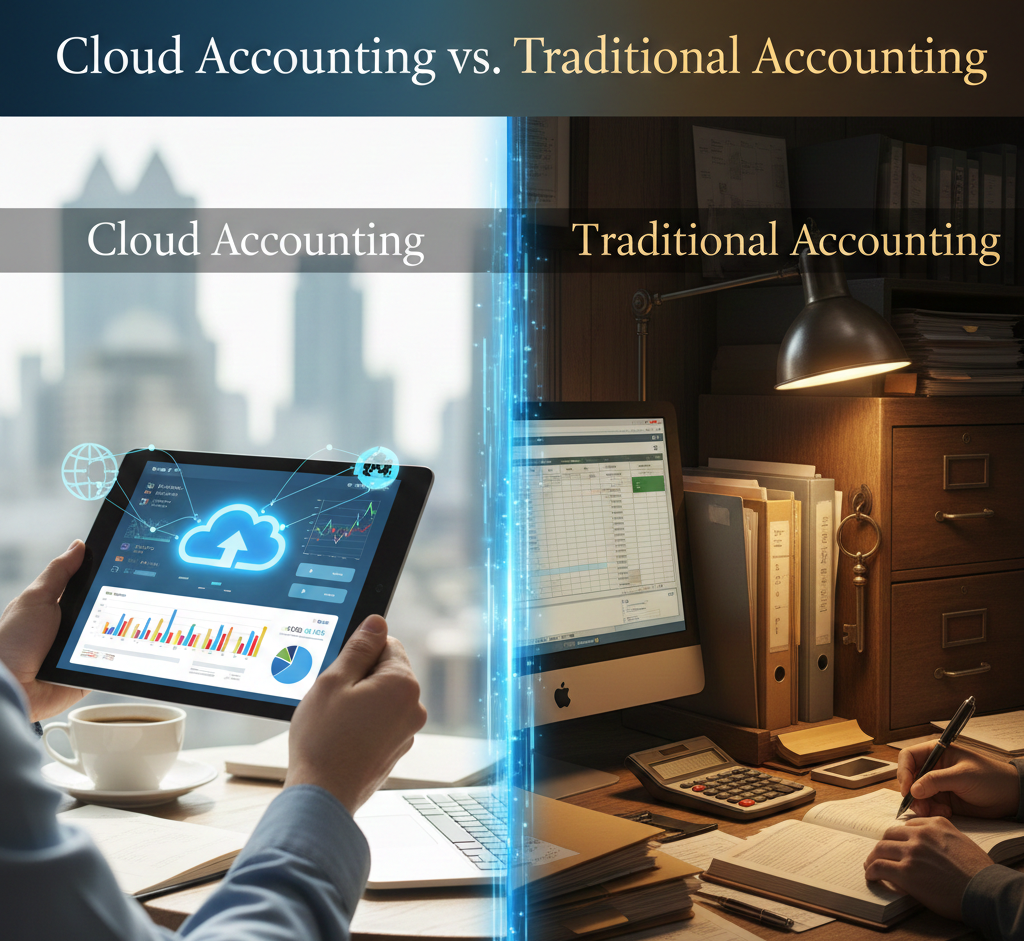
There are numerous opportunities on cloud accounting and traditional accounting, and businesses have a choice of how to manage their financial processes in 2026. Cloud accounting takes advantage of the internet-based system, which enables firms to automate their operations, reduce their work, and learn their financial position anywhere virtually.
The reason behind its increasing adoption is due to technological development and rising need to get real time insights. On the other hand, traditional accounting is still embedded in manual processing and local data storage that is attractive to businesses, which value traditional processes more than digital change. The two approaches are able to support the various needs of the organization depending on the factors such as size of the company, budget, as well as operational priorities.
Features of Cloud Accounting
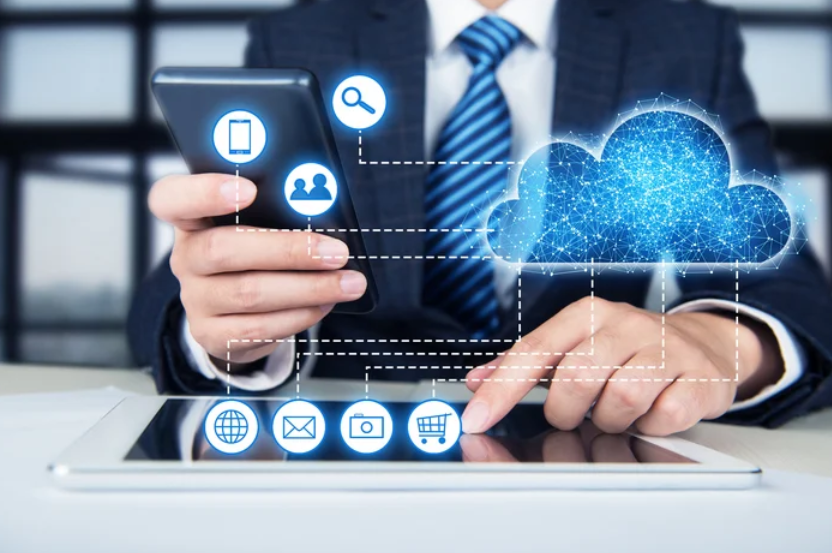
Cloud accounting has a variety of features that are in line with the current business requirements. The possibility to automate the routine and repetitive activities, i.e., invoicing, expenses tracking, and tax calculation, is one of its primary strengths.
The automation does not only save time but also minimizes chances of human errors enhancing the accuracy of financial records. Moreover, a great number of cloud accounting systems can offer customizable dashboards, and it helps businesses to see key performance indicators and financial metrics in real time.
The integration with the third-party applications is another feature to be highlighted. Regardless of whether it is integrating with e-commerce platforms, project management tools, or banking systems, such integrations enable enterprises to establish a centralized ecosystem in order to manage a number of operations. The service providers also update cloud solutions on a regular basis so that users can enjoy the latest features and meet the requirements of the evolving regulations without necessarily putting extra efforts.
When it comes to business organizations that operate internationally, there are a lot of cloud systems providing multi-currency services, meaning that they can easily transact business across respective nations. This is especially useful among those organizations that seek to enter international markets.
Moreover, mobile accessibility will mean that financial information can be accessed or handled on-the-fly using smartphones and tablets, and this ability will allow making decisions more flexible. All these are features that enable business to remain competitive in the present world that is dynamic and fast paced.

Characteristics of Traditional Accounting
Conventional accounting is labor-intensive with a lot of manual work and hardcopy records that in most cases take a lot of time and efforts to have a well-organized record. Financial processes, e.g. the data entry and calculations, are normally done without the assistance of automation, which might raise the probability of human error. Although there are simple software tools that some businesses use to help them trace finances, there are no high-Level integration opportunities hence, integrating different systems of operation may be difficult.
This method often relies on the use of hard copies of invoices, receipts, and financial statements, which have to be stored and kept well. This approach may be more direct and easier to handle in the context of smaller businesses or organizations that do not so much revolve around the digital innovation within their industries. It however tends to hamper cooperation, since it needs transfer of information physically or by direct access to a particular computer.
Management storage and access to the financial records may end up getting more complex with time especially when businesses expand. The space that has to be physically allocated to the storage of documents and the time-consuming aspect of searching a particular record can be an enormous disadvantage. Moreover, the conventional accounting practices might not be able to present the real-time financial data, because the production of the reports can be conducted manually and can require a lot of time.
Although these techniques might seem appealing to certain businesses due to the familiarity and level of control they provide, the need to use manual labor may act as a barrier to efficiency and scalability as the needs of the organization change.
Cost Implications
Cloud accounting can be used on a subscription model whereby businesses pay recurrent fees that cover software updates, maintenance and access to support services. Budgeting done under this model is predictable since expenditures are not made in one huge investment that consumes the cost at a specific time. Along with that, such subscriptions often provide automatic updates, so that the software would be in accordance with the ever-altering rules and provide the latest functionality without any additional spending.
Conversely, the conventional accounting systems are normally characterized by the use of software or licenses that require a single purchase, which might seem to be cost-efficient at first. But with time this would require a business to make separate payments to update, get more licenses or even technical support and these can be unexpected costs. The maintenance and repair of the hardware and the expense of the physical storage of the documents may equally increase the overall cost of the financial burden that comes with the traditional process.
In the case of expanding companies, the change in user needs or data capacity can be supported with the scalable pricing of cloud accounting at minimal financial cost. Traditional systems on the other hand might need additional hardware or infrastructure investment to support the needs of a growing organization and therefore incur greater initial and recurrent costs. Companies need to critically consider the financial cost of the two strategies in the long-term in order to make their accounting technique consistent with their operational and budgetary objectives.
Security Considerations
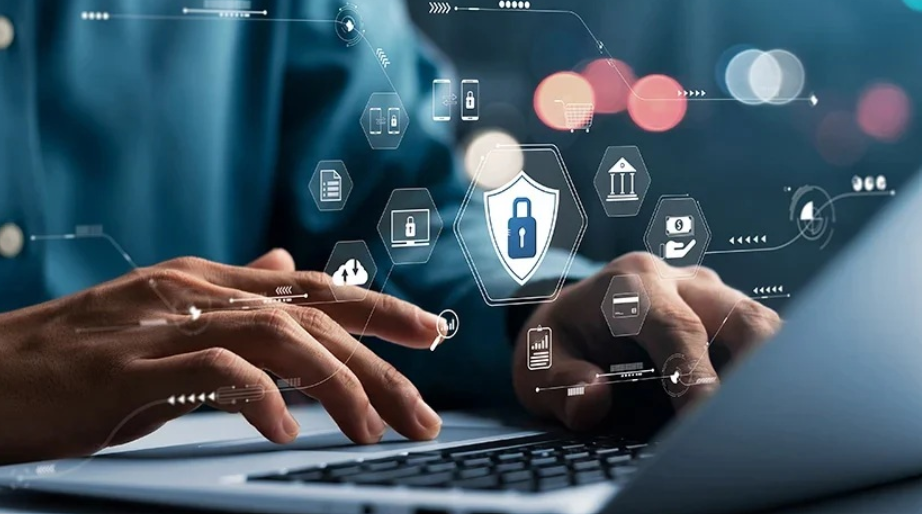
The cloud accounting systems are technically designed to secure financial information such as encryption technologies that secure information during information transfer and storage. Regular audits are usually carried out by these systems to detect and counter any vulnerabilities that may reduce the chances of breaches.
Another important feature is automatic backups, which will guarantee the ability to recover the data in case of some unanticipated situation, including the breakdown of the system or cyberattack. Access controls allow business entities to provide user permissions in order to restrict access to sensitive information by users, and this increases internal security.
Although traditional accounting systems have had some elements of digital security such as password protection, they have also had the option of physical protection such as locking of documents. These systems are however more prone to physical risk, such as loss or damage through theft, fire or flooding.
Also, the process of manual backup can be more labor-intensive and coordinated, and the risk of human error is high. In contrast to cloud solutions, the traditional systems might lack real-time monitoring of the potential threats, and this can delay the response to the security incident.
Both techniques need enterprises to also instill effective measures, including training employees on how to handle financial information without being reckless, which will do more to reduce risks. In both instances of systems selected, security is the responsibility of both businesses and their accounting service providers.
Adaptability and Scalability
Cloud accounting systems are also naturally flexible and thus are suited to businesses that are undergoing growth or change. These platforms are capable of supporting more and more users, larger data volumes, and other capabilities without making major investments in new infrastructure.
This scaling is usually enabled by subscription systems that enable business to scale up their plans when required so that they can only pay what they use. Moreover, cloud solutions are often implemented smoothly with others and software, and it is simpler to add functionalities to the solution to be compatible with the changing operational requirements.
Comparatively, traditional accounting systems are prone to failure in keeping up with growth. Added users or storage capacity are usually associated with buying more hardware or software which can be time and money consuming. These systems can also fail to combine effectively with the other tools and therefore scattered workflow as businesses grow.
The need to customize the traditional setups to suit unique needs would probably demand extra resources and hence complicate the issue of scalability further. Companies that depend on such systems might also face difficulties keeping efficiency and order as the business expands, particularly in highly evolving conditions. This scaling out effectiveness is also one of the decisive elements when comparing these two styles, as it directly affects the capability of a company to manage the future growth or demand changes.
User Experience and Training
The accounting systems that are provided in the cloud are aimed at simplifying the workflow, which enables users to carry out the financial tasks more easily. The interfaces are usually user friendly, and do not need much technical skills to use. The presence of built-in features, such as step-by-step guides and help centers, will help the users to have a chance to troubleshoot common problems on their own.
The training materials such as webinars and video tutorials are also offered by many providers in order to make teams proficient with the system within a short time. They are especially helpful in organizations with small IT support or in organizations with high staff turnover.
Conventional systems of accounting, however, may have a longer learning curve. Workers might have to take additional time to learn about manual operations and non-computerized processes. Businesses might need to spend extra resources onboarding and training in order to be consistent and accurate as per the system in use.
Adjustment may be even harder with teams that have switched to digital means later. The conventional approaches usually do not have dynamic tools to make them assist on demand and leave the user to depend on either in-house knowledge or the external sources to provide guidance.
The ease of access to training material and the usability of the system contributes much to the speed with which a business is able to learn a new accounting technique and adapt it to their daily business without some inconveniences and inefficiencies.
Conclusion: The Future of Accounting
The future of accounting in 2026 brings into focus the unique benefits and issues of the cloud and traditional approach. Companies have to look at their individual needs, such as the complexity of business operations, expansion strategy, and the availability of resources so that they can determine which system to use that suits their objectives.
The flexibility of cloud accounting to meet the needs of the dynamically evolving demands and the ability to access financial data in real-time have resulted in its growing appeal to any organization that values efficiency and scalability. Conversely, the old accounting can be a valid option when one has limited dependence on digital tools or does not prefer new ways of operating.

The resolution here is always based on the ability to balance the immediate requirements with the long-term goals and make sure that the method adopted is able to serve both the present and the future. With the ever-changing market conditions and evolution of technology, business will be forced to review their strategies on a regular basis, to ensure they are in position to be competitive.
Companies can make decisions that facilitate growth sustainability and efficient finances by keeping abreast of the abilities of the tools at their disposal in a more dynamically evolving environment.
Not sure whether cloud accounting or traditional accounting is right for you? Let Sunrise Accountants guide you to the smarter solution, get started today.