
Essential Monthly Bookkeeping Checklist Every Business Should Follow


Introduction to Monthly Bookkeeping
It is necessary to manage your business finances monthly in order to stay afloat and pursue growth. A designed and systematic bookkeeping ensures that all the financial information is correct and current. The use of this practice gives you a basis in making informed decisions and helps you track the performance of your company over time. An efficiently planned bookkeeping practice is time-saving, as well as, it minimizes the occurrence of expensive errors and financial mistakes.
Applying a monthly checklist of bookkeeping will make it easier to make sure that you remain in control of your financial obligations. Being a small business owner or a large business owner, you can save yourself the hassle of having to go through volumes of financial records by setting aside time every month to look through your books. The trick lies in chopping the tasks into manageable bits and building up the habit patterns that will ensure that everything is in line.
This will help you deal with issues that could arise early enough by including regular review of financial transactions, accounts receivable and payable, inventory and financial statements in your monthly schedule.
Moreover, one of the benefits of maintaining well-organized and documented records is to ensure that you are up to date with all matters concerning legal and tax obligations, which is a very important part of being in business. Organized bookkeeping practice helps to maintain a more sustainable financial standing, and you can concentrate on the long-run success.

Review Financial Transactions
Checking of financial transactions is a preliminary process to verify the legitimacy of the financial records of your business. The first step is to check all the recent transactions that are documented in your accounting system and ensure that every one of them is reflected in your bank and credit card statement account. The process will assist in identifying any inconsistency like an unmatched amount, duplicate charges, or missing entries that may influence the level of accuracy of your financial information.
To ensure that recurring transactions such as subscription charges, loan payments, or automated charges are entered and classified appropriately, please pay close attention to them. Proper classification is crucial in ensuring that there is a proper record keeping and production of sound financial reports. In case you find any mistakes, you should resolve them immediately to avoid any issues when reporting or preparing your tax.
It is also a healthy habit of keeping track of transactions in regard to any anomalies that might be an indicator of the unauthorized actions. Although reconciling, look out in unanticipated charges or new vendors and act as soon as possible to investigate and dispel any issues.
In order to streamline this process, you can take advantage of the abilities of your accounting software, like matching of transactions and reporting applications. These programs make the reconciliation process easier and minimize the chances of a human error. Regularity in this habit would keep your records accurate and up to date and would in the end give you a better idea of your financial status.
Check Accounts Receivable and Payable
Periodically checking on your accounts receivable and payable is a way of keeping the business with good cash flow. In the case of accounts receivable, look at the outstanding invoices to determine those who have not paid on time and make subsequent follow-up on the clients where necessary.
Timely payments and effective communications are used to promote timely payments and minimize the chances of missing the deadline of getting payments. You should consider accepting various payment rates so that your customers would find it easier to pay their invoices.
In the accounts payable department, monitor the future dates of payment in order to prevent non-payment or late payment. Delays in payments may cause a fine or worsening relationship with suppliers and therefore a time line in clearing payments is very important. Payments should be done according to terms and amounts where the most important commitments are paid in the first place.
Use the automation applications in your accounting software to make it easier to keep track and reminders of your receivables as well as payables. These are tools that can produce reports that will point on overdue balances, payment patterns and future obligations, so that you remain well organized and proactive. Accuracy in recording payments and receipts will also ensure that there is no mismatch of financial records.
Always be keen on reconciling accounts on a regular basis to detect mistakes or misunderstandings in time. In case some discrepancies are noticed, them immediately through reference to invoices, contracts, or brokerage arrangements in order to put the record straight. To facilitate this, it will be most appropriate to stay organized and document the invoices, confirmation and correspondence to payment and to clients or vendors.

Evaluate Inventory Levels
Proper inventory tracking is essential to the businesses dealing with tangible merchandise. Through the inventory data reviewed on a monthly basis, you will be able to find out the trends in the stock movement and ensure that the resources are allocated efficiently. Through this process the excess stock that can tie up capital is also avoided and also lack of important items that may cause loss of sales opportunities is avoided.
Inventory management software may also ease the tracking process as it allows getting real-time information on the quantity of stocks, sales trends, and reorder points. These tools also allow you to develop personalized reports indicating the products moving quickly and those with lower turnover rates, to make the wise purchases. In the case of seasonal businesses, monthly inventory assessments play a key role to make adjustments on the stock level in view of the varying demands.
Also, compare the counts of physical inventory with the numbers in your system to determine the presence of any discrepancies. The causes of these may be data entry mistakes, theft, or spoiled goods. Reporting discrepancies early will make your records dependable and will enable you to make the required corrections before they are magnified into bigger problems.
Also, this process may include reviewing supplier performance, which will enable you to evaluate the performance of the current vendors in comparison with your business requirements. This should be in terms of delivery time, quality of products and cost, so as to know whether there are other suppliers who have a better offer. Reviewing these relationships on a regular basis can help in better inventory management.
Analyze Financial Statements
Financial statements are also important in knowing how your business is doing as well as are a very important part of your monthly bookkeeping. Pay attention to your income statement to understand revenue, cost of goods sold and operating expenses, which will help you determine whether the company is profitable and where you should adjust your spending in order to achieve profitability.
On the other hand, the balance sheet provides a summary of the assets, liabilities, and equity of your business that enables you to measure the financial stability and liquidity.
Plunge into the cash flow statements and keep track of the flow of money in and out of your business making sure you have adequate cash to meet your obligations and to plan to take advantage of the growth opportunities.
Particular attention should be paid to the variances between the forecasted and the actual numbers, since they might indicate the changes in the effectiveness of operations or unexpected costs.
You can use leverage financial ratios, like current ratio, debt-to-equity ratio, to assess the financial health of your company and compare it with industry averages. These indicators assist in identifying the strengths and possible risks which need to be addressed.
In order to simplify the work, it is better to make use of the financial reporting features that are offered in your accounting software, as they can produce detailed reports and visualizations.
It is easier to detect trends and patterns with the help of these tools and to get useful data to base your decision-making. It is essential to analyze these statements regularly in order to find the opportunities to improve the performance and to distribute the resources successfully.
Prepare and File Necessary Documents
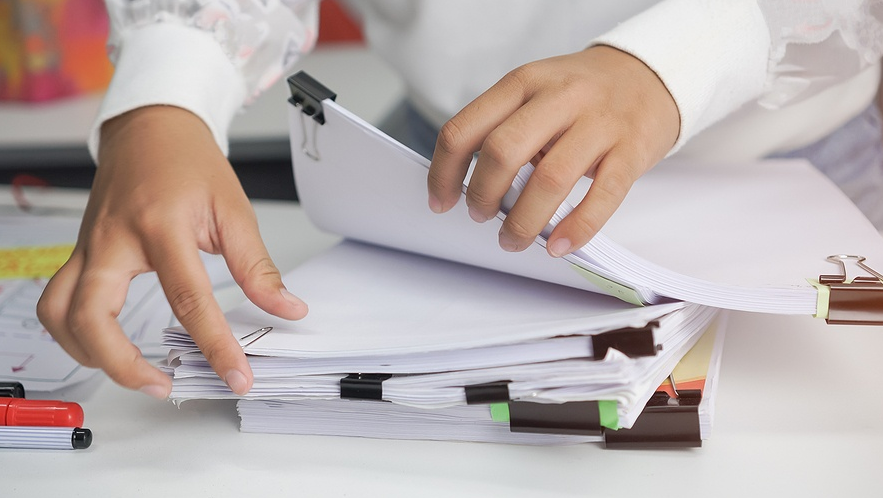
It is also a significant part of maintaining business in order and running a smooth business to keep the required business records and organize them. Begin with the records (invoices, receipts, contracts, payroll reports, and so on). This organization eases access to certain documents when it is required and assists to sustain professionalism in the financial reporting. Use a system of naming and filing so as to avoid confusion or misplaced records.
This can be done in a much easier way by using digital tools in managing documents. Numerous software programs can enable you to scan and save documents with high levels of security that will lower the amount of physical storage and the risk of damage and loss.
Cloud based products will provide you with the capability to access your records at any time and location making it easy to work with your team or accountant.
Be careful about the documents needed in preparing tax, like expense receipts and payments to vendors in order to be sure that all the information is present and counted. Maintaining records on a monthly basis will prevent last minute scramble of the records during the taxation period or audit.
There is also the need to keep track of filing deadlines of documents such as payroll tax filings or even regulatory filings to ensure that one remains in check with the law. Use automated notifications or place reminders to monitor the dates of the due submission to minimize the chances of being penalized by submitting the work later than stipulated. The organization of records and easy access to them helps in the pursuit of professional management of the financial requirements.
Plan for Upcoming Expenses
Budgeting the future costs is a necessary component of proper financial management. You can get the plan of limiting surprises by checking your financial trends and expenses that incur regularly so that your business can run smoothly. Take your past information and forecast the monthly costs including rent, utilities, payroll, and vendor payments and consider seasonal or industry-related changes that could affect the costs.
By classifying your projected costs into such categories as fixed costs, and variable costs, you could be at a position to understand where you have to allocate the funds. Fixed costs such as lease agreements will always be constant whilst variable costs might vary according to the level of production or sales. A clear image of these categories will enable you to plan spending in such a way that you will meet the important obligations when necessary.

It is a good idea to have a contingency fund that is kept aside to cover unexpected costs, including equipment repairs or unexpected costs in operations. By putting aside, a part of your budget to such scenarios you are sure that your business will be flexible and strong enough to stand up to any obstacle that comes around.
Moreover, find time to visit and negotiate contracts with suppliers and service providers to find the possible cost-saving opportunities. Reviewing and revising your expenses plan to a regular basis helps in better decision making and in ensuring that your business runs on a sustainable course so that you are always equipped to meet the requirements of planned and unexpected financial needs.
Improve accuracy, stay compliant, and gain full financial clarity, partner with Sunrise Accountants for professional bookkeeping and accounting services today.